Why Institutions Must Rethink Exam integrity
Tamper-proof assessment strategies are becoming essential for institutions that need secure, transparent, and defensible exam outcomes. As assessments move further into digital environments, organizations must ensure that results cannot be altered, lost, or questioned.
Every institution that delivers assessments eventually faces the same critical question:
Can we prove our results are trustworthy?
Traditional assessment models; whether paper-based or poorly digitized — leave room for manipulation, human error, and disputes. Results can be altered, records misplaced, and oversight becomes difficult when processes rely heavily on manual intervention.
For universities, certification bodies, regulators, examination boards, and corporate training providers, this is more than an operational challenge. It directly affects credibility and long-term reputation.
Many organizations invest heavily in curriculum design and accreditation but still struggle with assessment integrity, especially as global education bodies like UNESCO continue to emphasize trusted digital learning and assessment frameworks.
This is why institutions are increasingly adopting a tamper proof assessment approach — one that ensures results are secure, traceable, and defensible.
What Is a Tamper Proof Assessment?
A tamper proof assessment is an assessment environment designed to prevent unauthorized changes, record every action, and generate results that can be verified at any time.
It combines technology, workflow controls, and automation to protect the full lifecycle of an exam — from creation to certification.
A modern tamper proof assessment typically includes:
• Role-based permissions
• Automated scoring and validation
• End-to-end audit trails
• Secure data storage
• Compliance-ready reporting
By implementing these controls, institutions move from trust-by-assumption to trust-by-evidence.
When regulators ask how a result was produced, the system should provide clear proof instantly.
Why Traditional Assessment Models Fail
Many organizations assume that moving exams online automatically solves integrity problems. In reality, digital tools without proper controls can create new risks.
- Manual Processes Increase Risk
Human intervention in grading or result entry introduces inconsistencies that can undermine confidence in outcomes.
- Weak Audit Trails
Without automatic tracking, it becomes difficult to prove what happened during an assessment process, especially during audits or disputes.
- Fragmented Tools
Using separate platforms for testing, grading, certification, and reporting creates data gaps where errors or manipulation can occur.
- Limited Oversight
Regulators increasingly expect transparency and documentation, not just final scores.
The result is that institutions spend more time defending outcomes than improving learning experiences.
How Secure Assessment Systems Prevent Tampering
Modern secure assessment systems are designed to eliminate vulnerabilities by embedding integrity into every stage of the process.
Controlled Workflows
Role-based access ensures only authorized personnel can create, edit, approve, or publish assessments and results.
Automated Tracking
Every action — from exam creation to result release — is recorded automatically, creating a complete history of activity.
Consistent Evaluation
Automated scoring reduces subjectivity and helps ensure fairness across candidates.
Centralized Infrastructure
Instead of disconnected tools, all assessment activities live within one controlled environment, reducing risk and improving oversight.
When institutions adopt secure assessment systems, integrity becomes scalable rather than dependent on manual supervision.
The Importance of Verifiable Exam Results
One of the biggest benefits of a tamper proof assessment is the ability to produce verifiable exam results.
Verifiable results allow institutions to:
• Demonstrate fairness to learners
• Respond confidently to disputes
• Meet accreditation requirements
• Strengthen stakeholder trust
When outcomes can be verified instantly, institutions no longer rely on explanations,they rely on evidence.
Why Auditable Assessment Systems Matter for Compliance
Regulators and accreditation bodies increasingly require proof of process, not just outcomes.
Many institutions align their security practices with internationally recognized standards such as ISO 27001 to stregnthen audit readiness and data protection
Auditable assessment systems make this possible by:
• Recording all actions automatically
• Maintaining immutable records
• Providing clear reporting for audits
• Simplifying compliance checks
This reduces administrative stress and ensures institutions are always prepared for external review.
Why Tamper Proof Assessment Matters for Every Stakeholder
Universities and Schools
Protect academic credibility while ensuring fair and transparent evaluation.
Certification Bodies
Increase confidence in credentials through verifiable and secure processes.
Government Ministries and Regulators
Improve oversight through transparent and auditable workflows.
Corporations and Training Providers
Ensure certifications accurately reflect real competence.
Examination Boards
Reduce fraud risk and publish defensible results faster.
Across every sector, the outcome is the same:
Stronger trust in assessment outcomes.
Key Features to Look for in a Tamper Proof Assessment Platform
When choosing assessment technology, decision-makers should prioritize:
1. End-to-end auditability
2. Role-based access control
3. Automated result generation
4. Compliance-ready reporting
5. Secure data storage
If a platform cannot clearly demonstrate these features, it is unlikely to support long-term assessment integrity.
How SimplifiedIQ Supports Assessment Integrity at Scale
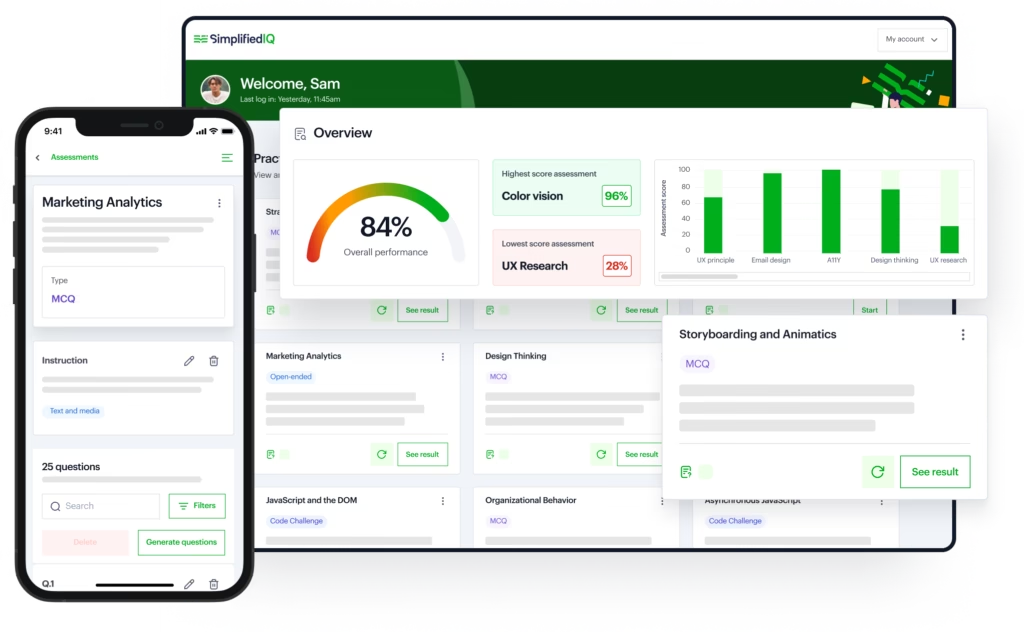
SimplifiedIQ is designed as integrity infrastructure — not just an exam tool.
It helps institutions:
• Deliver secure, scalable assessments
• Generate verifiable exam results automatically
• Maintain compliance through auditable assessment systems
• Reduce fraud risk and operational errors
• Scale assessment delivery without increasing risk
By embedding integrity into every stage of the process, SimplifiedIQ enables organizations to focus on learning outcomes instead of administrative challenges.
The Future of Assessment Integrity
As digital learning expands and certifications become more global, institutions will face increasing pressure to prove that outcomes are authentic.
A tamper proof assessment is no longer optional — it is becoming the standard for organizations that want to maintain credibility and meet regulatory expectations.
Institutions that invest early in secure, transparent infrastructure gain a long-term advantage:
Trust that scales.
Ready to Build a Tamper Proof Assessment Process?
If your institution wants stronger assessment integrity, secure workflows, and verifiable exam results, now is the time to modernize your infrastructure.
Book a demo with SimplifiedIQ today and see how integrity-first assessment systems transform trust, compliance, and performance.